

What does autistic burnout actually feel like, and how is it different from ordinary burnout, depression, or simply being exhausted?
Autistic burnout feels like complete neurological depletion. I'm a huge Lord of the Rings fan, so I like to use Lord of the Rings references. It feels like when Bilbo tells Frodo he feels thin, like butter being spread over too much bread.
I've been in autistic burnout for over two years, and I wouldn't wish it on my worst enemy. I'm so tired all of the time, and it's like I'm starting every day with a negative life bar, negative spoons, or negative capacity. In order to alleviate it and come through the other side, a lot of this has to do with reducing demands and sensory overwhelm. However, because we live in a capitalist hellscape, that isn't always possible.
It's this type of exhaustion that can't be put into words. No matter how much I sleep, how much I rest, or how much I remove from my plate, it still exists. As an entrepreneur, my success got away from me early in my career, before I discovered that I was autistic. It was like a runaway freight train, not able to come to a full stop or veer onto a different track. I pushed myself so hard in so many different ways, creating multiple businesses, successful ventures, and projects, that by the time I knew what hit me, it was too late.
I've tried getting completely off the grid in terms of trying to disappear from day-to-day existence and demands. But as an autistic ADHDer, even though my body is completely exhausted and depleted, my mind is forever understimulated and needs some sort of dopamine and activity.
Workplace burnout can happen for a myriad of reasons. Maybe a vacation helps, a four-day weekend, a spa trip, a job switch, or a career change. Sometimes it shifts after a job or career change because it's tied to the workplace.
Autistic burnout is an excruciating experience compounded over time as demands and sensory overwhelm continue to pile up, far exceeding our capacity to manage them.
Autistic burnout can also mean losing access to your special interests, which can feel torturous. It is such extreme exhaustion that no amount of rest can alleviate it. You may become more sensitive to sensory stimuli and input, often leading to increases in meltdowns and shutdowns.
Autistic burnout can also involve autistic skill regression, where things that maybe didn't take so much energy, effort, or thought are now almost impossible, or you've lost access to things you were once able to do, like speaking, brushing your teeth, or spending time doing things that once came naturally.
Autistic burnout can also be linked to increased mental health struggles and suicidality. For me, it feels different from depression, though the two can overlap. Depression can include a loss of interest or pleasure. In autistic burnout, I may still be interested in something but unable to access it because I don't have the energy or capacity.
How do masking, people-pleasing, and long periods of overextension build toward autistic burnout?
Masking is neurologically exhausting and separates you from your sense of self. Masking is also survival. Masking can also be a privilege for those who simply cannot mask, including some moderate- and high-support-needs autistic people who might be nonspeaking. Masking can also be life-saving for Black and Brown people, or queer and trans people, who are in environments where it is not safe for them to drop the mask.
If you've been a people pleaser, high achiever, and high masker like me, you might have wondered throughout your life why every time you leave a social event or work event, you feel so damn exhausted. You may wonder why it takes you days, if not weeks, to recover from something that should have been so simple or easy.
The more we push ourselves in directions and situations that are uncomfortable for us and try to power through, the more we deplete ourselves without recovery.
Masking takes something from us every single time and often leads to a situation where we don't even know who we are without the mask. You may not even know what you like to do, what your preferences are, or what your actual personality is.
When we're constantly putting the needs of others in front of our own, we're masking to keep ourselves safe and to be a part of things—so we don't stick out, so we're not bullied or harassed, and so we can try to find a sense of belonging—only to create the exact opposite.
Not everyone can just unmask whenever they want. They may not have the privilege, a safe space, or safe people to unmask with. If you can't unmask daily in your workplace or in social settings, micro-unmasking and doing so in small moments, even at home for 15 minutes, is important.
Often when we're masking, we're putting ourselves in situations where there is more sensory overwhelm, leaving us completely fatigued and destroyed from a sensory perspective. I'm someone who struggles with heat intolerance and needs quiet, dark, understimulating environments. When I'm masking, I'm saying yes to things like socializing or committing to things that are far beyond my capacity and ability to support and accommodate myself. This may look like saying yes to a social obligation in a really loud, crowded environment, or somewhere that's really hot, uncomfortable, busy, or chaotic, but forcing myself to participate without asking for what I need.
Since discovering I'm autistic, I've learned to unmask in almost every situation. But I also acknowledge that I have the privilege to be able to do so as a cis, heterosexual white man. I now genuinely say no to things that I know I don't want to participate in, whether it's from a sensory perspective, a capacity perspective, because something isn't interesting to me, or because I know it will cost me dearly and I don't have it in me to recover quickly anymore.
What are some early warning signs of autistic burnout that people often miss in themselves or in someone they care about?
- Increased irritability when it comes to sensory stimuli.
- Maybe you're noticing yourself experiencing more meltdowns or shutdowns.
- Starting to lose access to your special interests and no longer finding them soothing, regulating, or joy-filled.
- Starting to distance yourself from other people and social situations, not because you may not want connection, but because you truly do not have the capacity for it.
- Losing access to your skills, like being able to get up and take a shower, brush your teeth, start your day, and do certain activities that used to come naturally to you.
- Exhaustion that cannot be alleviated, no matter how much rest, sleep, or recovery you try.
I think autistic burnout can feel almost inevitable in the society we live in, and I believe many of us will come into contact with it, no matter how hard we try. I do think reducing as many demands as humanly possible in your day, week, and month, and reducing the sensory input that is overwhelming to your system, is unbelievably important.
On the flip side, I think it's impossible to reduce all demands and sensory input, and it is important to participate in sensory input that you find enjoyable. My good friend Dr. Megan Neff says this all the time: advice gets it wrong when it comes to autistic burnout because it's not all or nothing. We really need things to look forward to, like meaning-making, joy, and sensory input that we find soothing or enjoyable.
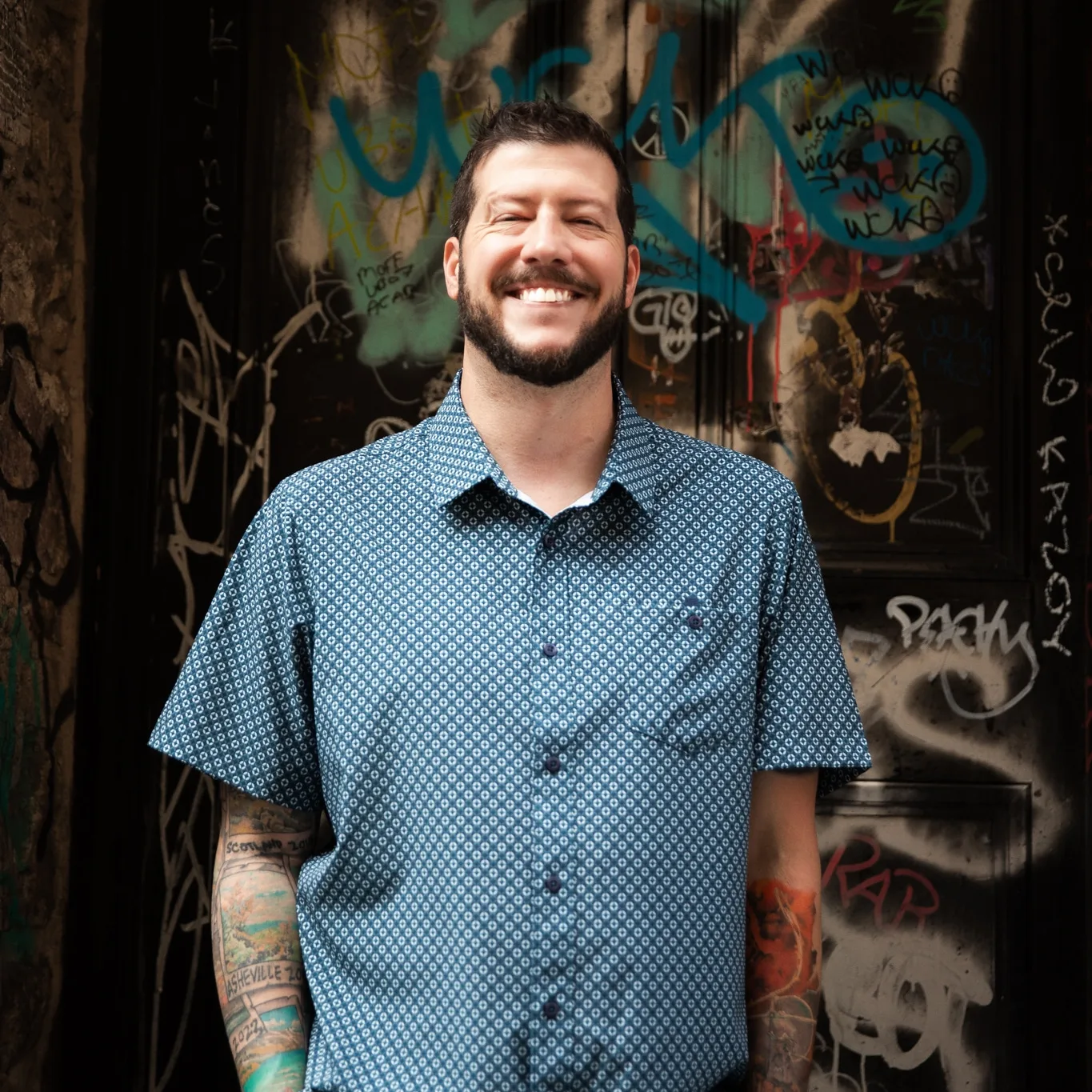
In Patrick's words
“I have stopped fighting against the way my brain works and have started to support it, love it, and appreciate it.”
What does recovery from autistic burnout tend to require, and which well-meant approaches can make it harder?
It requires a lot of time and a lot of deconstruction of what you think you know in terms of internalized ableism. I think society, especially under capitalism, tells us to just push through: we're only as good as our next creation, project, or contribution. We have to deconstruct a lot of this in order to try to come out the other side. Mine has been more than two years now and counting, and I've tried so many different things to come out from under it.
Being able to give yourself access to special-interest joy, even in small doses, is unbelievably important. Reducing as many demands as you have control over is really important. Avoiding or eliminating sensory input that shocks your system or overwhelms your system is important. Being able to rest, unmask, and sensory-soothe is crucial.
However, a lot of social media experts and advocates would say, "No matter the cost, unmask. No matter what, reduce all demands and sensory stimuli." This is really not realistic in anyone's life in society. You also need some sensory input, especially the sensory input that you enjoy and find soothing.
For a lot of us, it means we have to completely reconfigure and reconstruct our lives, stripping them down to the studs and trying to get a sense of:
- What is important to us?
- What can we not live without?
- What do we need to eliminate?
It's a complete reorganizing and rewiring. Being able to zoom out and completely rearrange your life so that you are not putting yourself in positions or environments that consistently shock and overwhelm you. I've had to say no to endless partnerships, collaborations, opportunities, and projects because I simply no longer have the capacity. It is literally painful to be awake, alert, and participating in a life that I've built.
Which workplace accommodations or changes can make the biggest difference for someone approaching or recovering from autistic burnout?
Being able to work from home or in an environment where you have control over the sensory input. For me, working from my home office and controlling my temperature, lighting, noise levels, and interactions is unbelievably important, but not everyone has the privilege to do so.
Asking for accommodations in the workplace, like having different work hours that work with your sleep schedule or take advantage of the time when you actually have energy during the day. Asking for things like fidget toys being available, comfortable seating options, lighting and sound preferences, and having control over your work schedule.
Some eligible U.S. workers may need to use FMLA leave to navigate autistic burnout or related mental or physical health conditions. Burnout can be so soul-crushing and exhausting that it can become mentally and physically dangerous, as chronic health conditions can pile up from pushing your nervous system so far past safety and capacity. A lot of us may also start to experience mental health struggles and even suicidality.
Being able to see a mental health therapist who understands autistic burnout is unbelievably important as well—preferably an autistic therapist.
If you're able to talk openly and candidly in your workplace with your colleagues and bosses, and you feel like there's a safe enough environment for you to be understood, I would encourage you to do so. I also encourage you to tread lightly and cautiously. As much as disclosure can be freeing, it can also create unexpected challenges and obstacles.
For AuDHD adults, how can the ADHD need for stimulation and novelty conflict with the autistic need for predictability and recovery?
The AuDHD tug of war is one of the most painful experiences I have in my life: the autistic need for consistency, sameness, familiarity, and routine versus the ADHD need for novelty, stimulation, excitement, and new experiences.
For years, as autism was waving the white flag as loudly as it could and I was spiraling quickly toward autistic burnout, I tried to set boundaries for the ADHD need to say yes to opportunities, collaborations, new projects, and things that felt interesting and exciting.
I even went so far as to make an agreement that I would only say yes to opportunities, events, and projects in even-numbered months, leaving odd-numbered months simply for recovery. This lasted for about two months, until I was offered a TEDx talk in an odd-numbered month and quickly blew up all of my plans.
This can feel like your neurotype is at war with itself, with competing access needs, interests, ideas, and desires.
As someone who is often overwhelmed from a sensory perspective and experiences intense sensory overload, my body is constantly exhausted or in agonizing pain. However, my mind is never tired. It is always going. It is forever understimulated from an intellectual perspective, constantly seeking projects and creative ways to use that energy to exhaust itself.
I have yet to find the balance. Although my life has slowed down immensely from several years ago, before going into burnout, it still does not mean that I have the solution or that it is easy to navigate this neurotype.
Once someone begins to recover, what’s involved in building a work life that is sustainable instead of returning to the same cycle?
If you don't completely change everything, then you change nothing, in my opinion, and you have to almost restructure and reorganize your entire life. This means getting a feel for your ideal schedule and trying to build around when you have capacity. The challenge is that capacity ebbs and flows and isn't often consistent.
Being able to work from home and owning two businesses—being able to say yes and no to things that come my way—has been unbelievably helpful, but it is also an enormous privilege.
What I would recommend is looking at the things that cost you from an energy and capacity perspective. What are the things that drain you? What are the things you light up around or still enjoy? How can we have more of the enjoyable stuff and less of the exhausting stuff?
How can we build more special-interest joy into our lives, more meaning-making, and more things that feel values-aligned?
I have to almost do a cost-benefit analysis of everything I do now, which is honestly exhausting, but absolutely necessary. I'm constantly asking myself, "Is the juice worth the squeeze?" Is it values-aligned? Does it feel important to me? Does it feel like something I want to participate in?
I'm also a prisoner to blank space on my schedule and calendar, especially when it's several months in the future. I've convinced myself that I will suddenly have energy by then, and that I can clear my calendar for a few weeks and that will do the trick. This never works. I never win. Life continues to life.
Reduce the number of demands and obligations per day. Before autistic burnout, I may have been able to record six podcast episodes, do two coaching calls, and handle a handful of other tasks. Now I limit myself to one or two things per day, acknowledging that my baseline is forever changed.
What can a partner, friend, therapist, or employer do that genuinely helps when an autistic person is in burnout?
Try hard to understand and learn about the experience. Be open and willing to talk about it if the person wants to communicate and speak about it. Don't pressure them to join things or commit to things they don't have capacity for. Allow them to cancel late, flake on plans, or step away from things.
Acknowledge that this is so much more than general workplace burnout or depression, and that it is a night-and-day experience. Validation and simply saying, "I see you. I see how much you're struggling and suffering, and I am here for you if you want me to be," means so much more than offering solutions from a toxic-positivity perspective.
We don't get through this without community and connection, in my opinion, and partners, friends, and therapists are all part of that community.
Being able to openly share these experiences with the people you care about or who are supposed to be your supports can be unbelievably helpful and healing. Pick and choose who you disclose to, as not everybody is going to get it. It can be really invalidating for someone to come back with simple health and wellness advice, to tell you to just get through it or take an extra day off work, or to try mindfulness and meditation.
Being understood and heard is unbelievably important and often life-changing and even life-saving. I know now that my friends who really get it and my wife, who really understands me, know that it's not personal when I have to bail at the last minute or change plans because of capacity, or because I can't even get off the couch for three days because I simply don't have the energy anymore.
The same can be said for people in my life who I work with or partner with in entrepreneurial creative journeys. Not everyone gets it, and some people take it personally, but it is not for me to change their mind or manage that for them.
Setting boundaries can be challenging not only for you, but also for the people in your life who are so used to you saying yes or pushing through. You may lose some people in your life, and that's okay. You will gain the ones who understand, who see you for you, and who support your needs.